

The Complete Guide to Wet Underfloor Heating (2027 Edition)
If you’re planning a new build, renovating your home or simply looking for a more efficient way to heat your property, you’ve probably come across wet underfloor heating. Over the last decade, it’s gone from being a luxury feature to one of the most requested heating systems in modern homes.
At UFH Experts, we’ve installed thousands of square metres of water underfloor heating across everything from family homes and barn conversions to schools, apartment blocks, churches, boats, aircraft hangers and large luxury properties. One thing we’ve learnt is that every project is different, but the principles of a well-designed system never change.
This guide explains everything you need to know before investing in hydronic underfloor heating, from how it works to running costs, floor finishes and whether it’s the right choice for your home.
What is Wet Underfloor Heating?
Wet underfloor heating, also known as water underfloor heating or hydronic underfloor heating, uses warm water flowing through a network of plastic pipes installed beneath your floor.
Rather than relying on radiators to heat the air in one area, the entire floor becomes a large, low-temperature radiator. Heat rises gently and evenly throughout the room, creating a far more comfortable environment than traditional central heating.
Unlike electric underfloor heating, which is generally better suited to smaller rooms like bathrooms, wet systems are designed to heat entire homes efficiently.
The biggest advantage is that the system works at much lower water temperatures than conventional radiators, making it ideal for modern, energy-efficient homes.
How Does Wet Underfloor Heating Work?
The principle is surprisingly simple.
Warm water leaves your boiler or heat pump and travels to a manifold. The manifold distributes water through multiple pipe circuits installed beneath the floor.
Each room can have its own thermostat, allowing you to control temperatures independently. Once the water has circulated through the pipework, it returns to the heat source to be reheated before completing the cycle again.
Because the floor has such a large surface area, it only needs water temperatures of around 35–45°C, compared to traditional radiators which often require 65–75°C.
Lower temperatures mean less energy is required to heat your home.
The Main Components Explained
Although the finished floor looks simple, there’s quite a lot happening underneath.
Underfloor Heating Pipe
The pipework is the heart of the system.
Modern PERT or PEX pipe is extremely durable and designed to last for decades. Once installed and pressure tested correctly, it requires virtually no maintenance.
Manifold
Think of the manifold as the control centre.
It distributes water evenly between each heating circuit and allows engineers to balance the flow, so every room heats correctly.
Thermostats
Every room can have its own programmable thermostat.
This gives far greater control than traditional heating systems, meaning bedrooms can stay cooler while living areas remain warm and comfortable.
Pump and Mixing Valve
These regulate both the flow rate and water temperature entering the system.
Insulation
One of the most overlooked parts of any installation.
Good insulation forces heat upwards into the room rather than allowing it to disappear into the ground or subfloor.
At UFH Experts, we always say:
A poorly insulated underfloor heating system is like filling a bucket with a hole in the bottom.
The Pros and Cons
Like any heating system, there are advantages and disadvantages.
Advantages
- Even heat throughout the room
- Lower running temperatures
- More energy efficient
- No visible radiators
- Greater freedom when designing interiors
- Improved comfort
- Compatible with renewable heating systems
- Individual room control
- Quiet operation
- Low maintenance once installed
Disadvantages
- Generally higher installation cost than radiators
- Better suited during renovations or new builds
- Poor insulation can reduce efficiency
- Response times can be slower in thick screed systems
That said, with the correct design and controls, most homeowners never notice the slower response because the system maintains a consistent temperature throughout the day.
Running Costs
One of the first questions we get asked is:
“Is wet underfloor heating expensive to run?”
The honest answer is no—provided it’s been designed and installed properly.
Because the system operates at much lower temperatures than radiators, it requires less energy to maintain comfortable room temperatures.
Running costs depend on several factors including:
- Property insulation
- Heat source
- Flow temperature
- Outside temperature
- Floor construction
- Heating controls
Homes with good insulation and weather compensation controls often see noticeable savings compared with traditional radiator systems.
The biggest savings usually come when underfloor heating is paired with an air source heat pump.
Which Floor Finishes Can You Use?
Nearly every modern floor finish is compatible with wet underfloor heating.
Porcelain and Ceramic Tiles
Probably the best choice. Tiles conduct heat extremely well and provide excellent efficiency.
Natural Stone
Another excellent conductor that retains warmth for long periods.
Luxury Vinyl Tile (LVT)
Increasingly popular because it heats quickly and feels comfortable underfoot. However, LVT does have a maximum surface temperature limit of 27°C.
Engineered Wood
A fantastic option provided it’s suitable for underfloor heating. Engineered timber is much more stable than solid hardwood.
Laminate
Most quality laminates now work perfectly with underfloor heating. Always check the manufacturer’s recommendations.
Carpet
Yes, carpet works too. The only consideration is ensuring the combined carpet and underlay thermal resistance remains within the recommended limits, usually 2.25 Tog
Heat Pumps vs Boilers
Both heat pumps and gas boilers work with wet underfloor heating.
However, this is where heat pumps really shine.
Air source heat pumps produce lower water temperatures than boilers, making them the perfect partner for underfloor heating.
Instead of forcing very hot water around radiators, they can operate efficiently at around 35–45°C, exactly where underfloor heating performs best.
Gas boilers still provide excellent performance, particularly in existing homes where a heat pump isn’t practical.
Whichever heat source you choose, a correctly designed system is far more important than the appliance itself.
How is Wet Underfloor Heating Installed?
Every project is different, but the process generally follows these stages.
1. Heat Loss Calculations
Every room is calculated individually.
This determines pipe spacing, output and water temperatures.
2. System Design
Pipe layouts are designed to achieve even heat across every room.
3. Pipe Installation
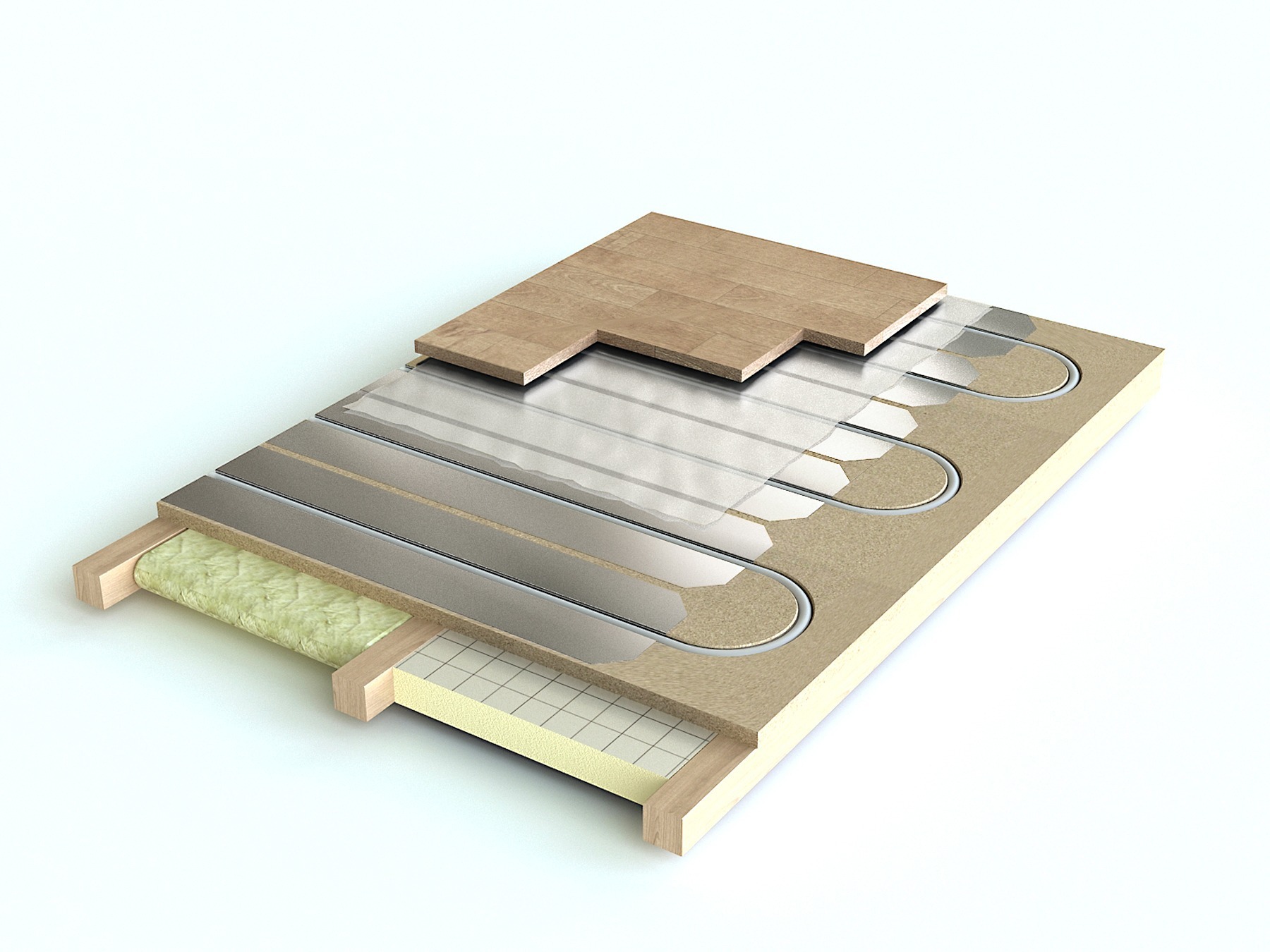
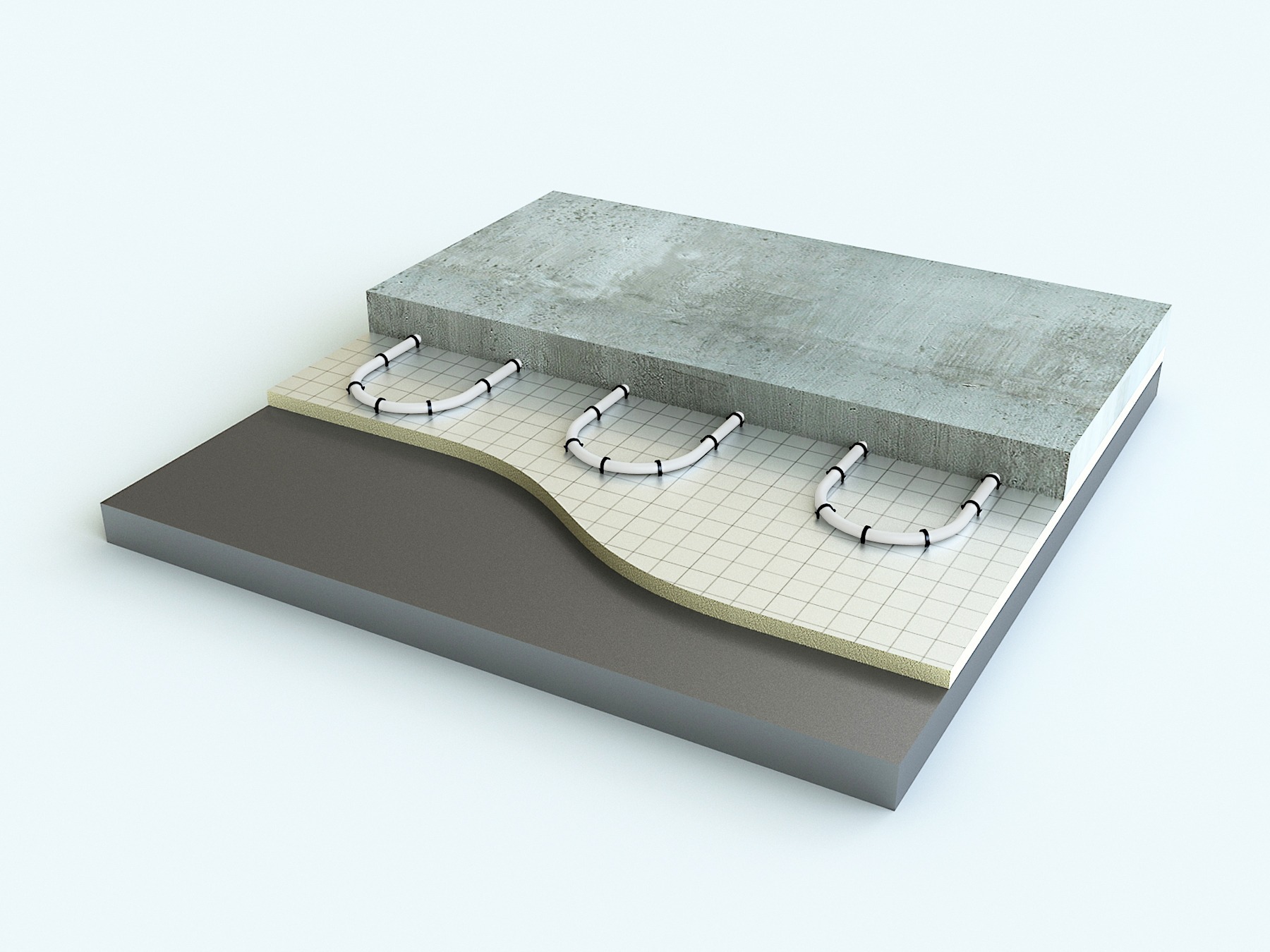
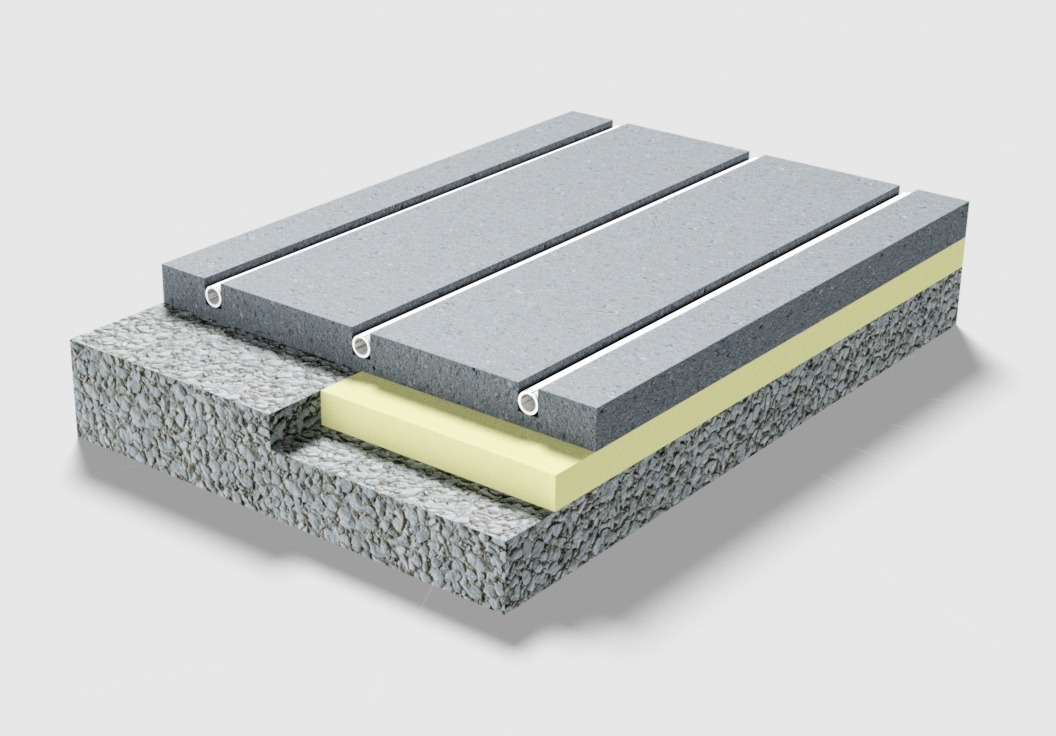
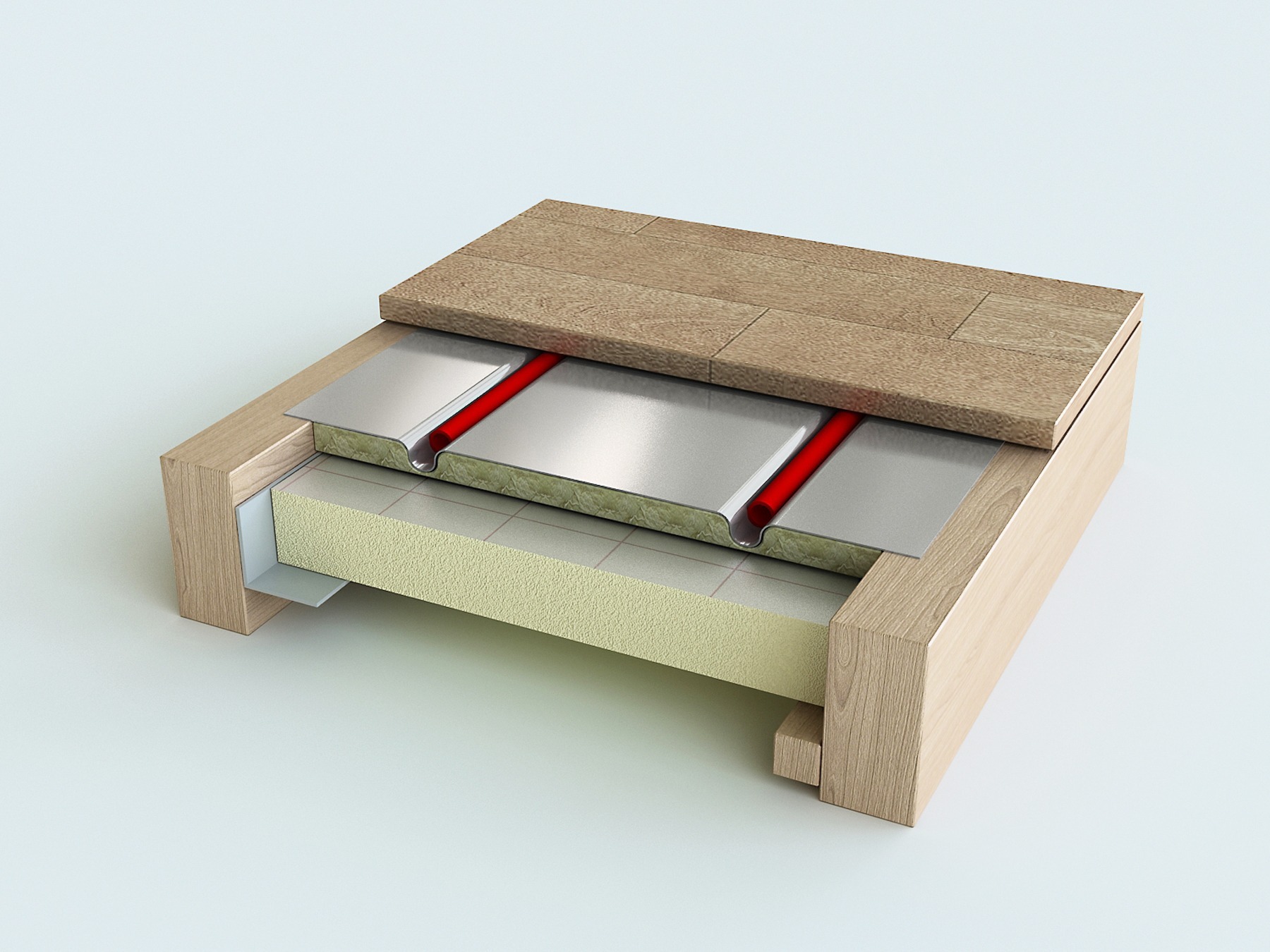
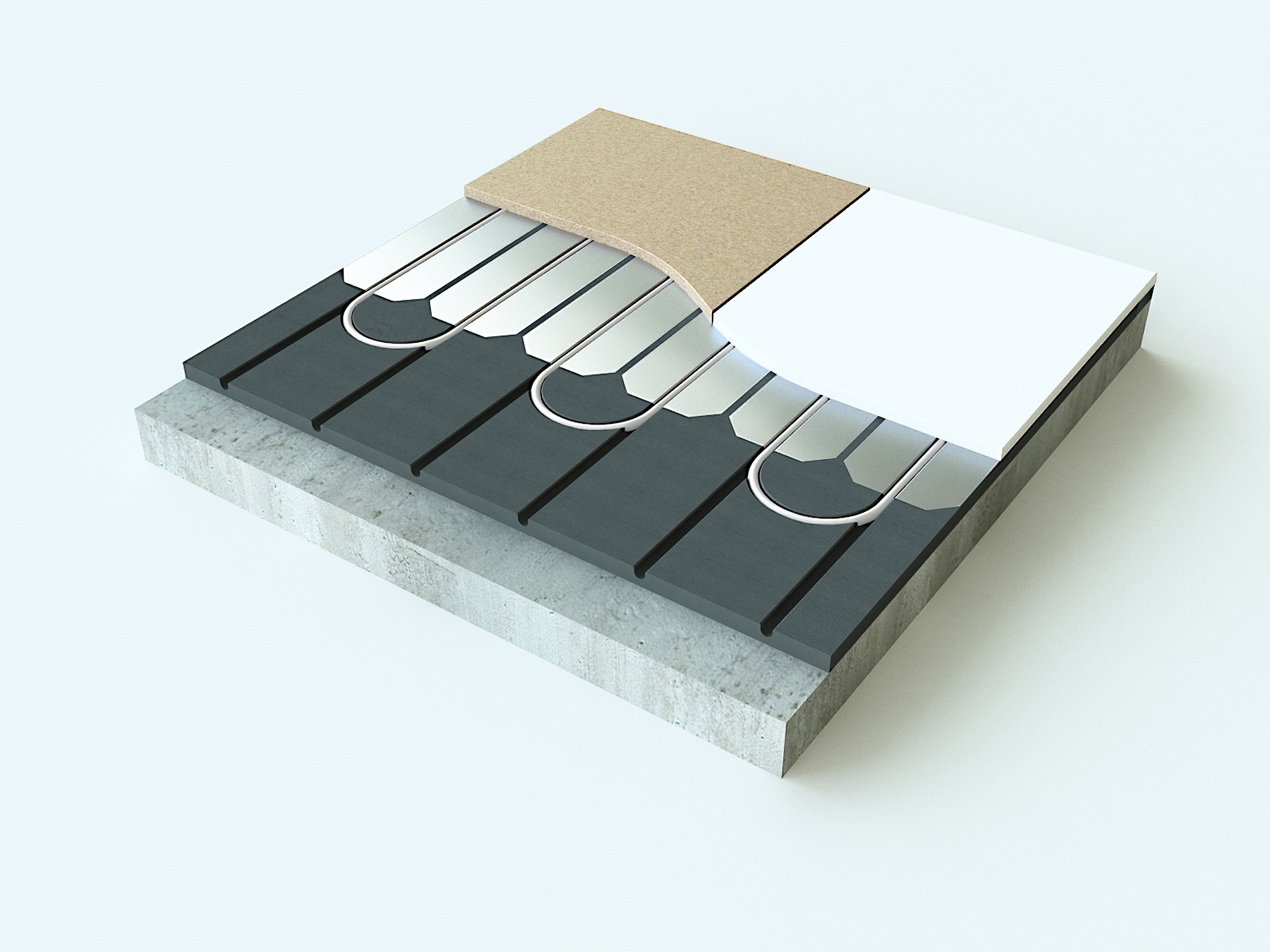
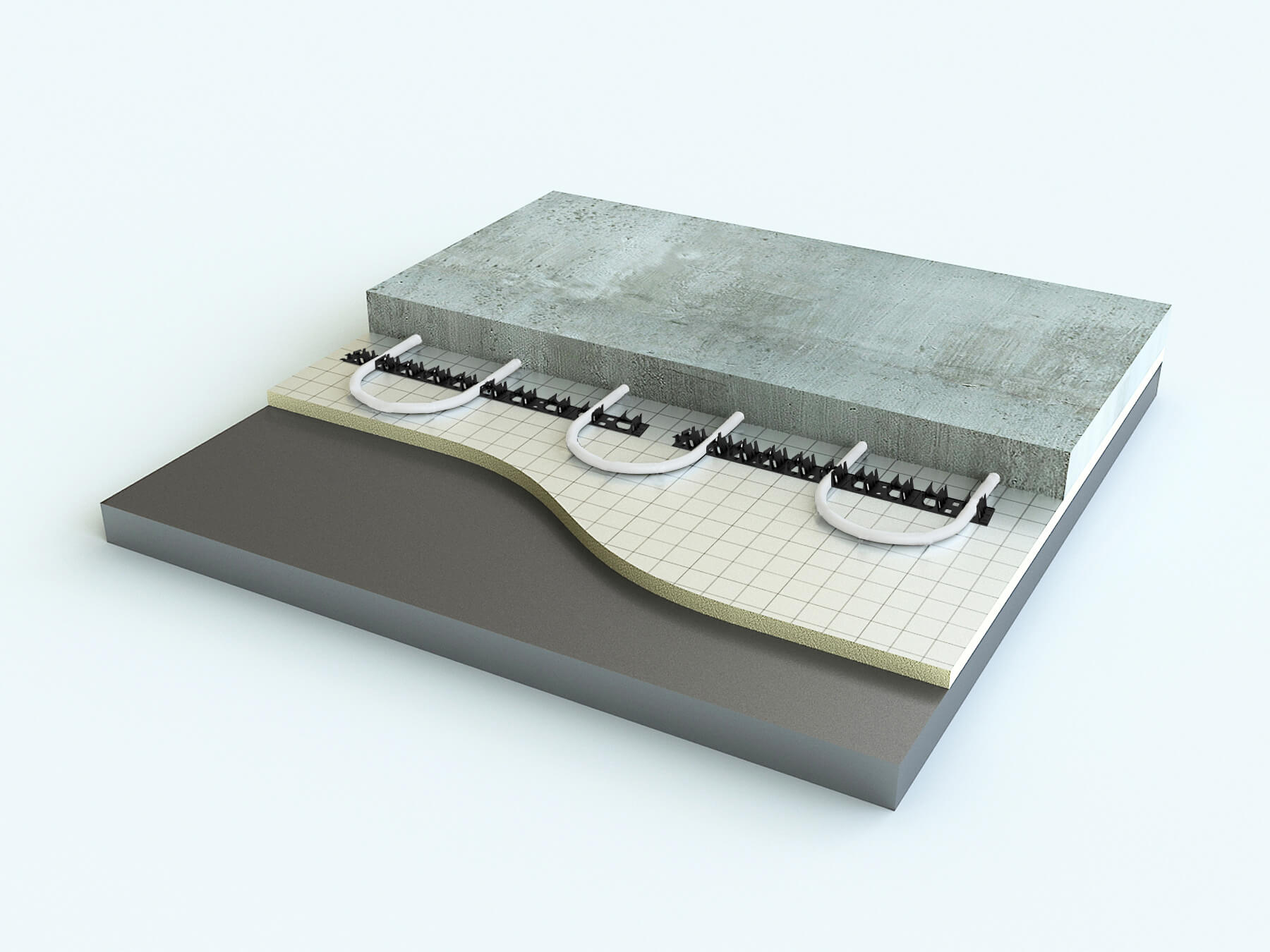
The pipe is clipped securely to insulation, castellated panels, routed boards or wood boards with aluminium spreader plates depending on the floor construction.
4. Pressure Testing
Every circuit is pressure tested before the floor is covered.
This confirms there are no leaks.
5. Screeding or Floor Covering
Depending on the build, the pipework is covered with screed or installed within dry floor systems.
6. Commissioning
Finally, the system is balanced, filled, commissioned and the controls are set up correctly.
This is often where the difference between an average installer and a specialist really shows.
Common Myths
“It takes hours to warm up.”
Not always.
Modern low-profile systems or our Retro Therma Milled system can respond surprisingly quickly.
“You can’t use carpet.”
You absolutely can.
It simply needs the correct carpet and underlay, not to exceed 2.25 Tog.
“It’s only for new builds.”
Not true.
We regularly install retrofit systems into existing homes on a weekly basis.
“If one pipe leaks you’ll have to dig the floor up.”
Quality underfloor heating pipe is incredibly reliable.
Leaks are extremely rare and are generally caused by other trades during the build or renovation from mechanically screwing to the floor.
“It’s expensive to run.”
In many homes it’s actually cheaper than conventional radiator systems.
Is Wet Underfloor Heating Worth It?
In our opinion, absolutely.
Not because it’s fashionable, but because it genuinely makes homes more comfortable to live in.
The even warmth, lower running temperatures and freedom from radiators all make a noticeable difference to everyday life.
The key is remembering that underfloor heating is only as good as the design and installation behind it. The cheapest quote isn’t always the best value if corners are cut on quality sourced components, pipe spacing or commissioning.
At UFH Experts, we believe every installation should be designed around the property rather than squeezed into a one-size-fits-all approach. That’s how you achieve a system that performs efficiently for decades, not just during the first winter.
If you’re considering wet underfloor heating, whether it’s a self-build, renovation or commercial project, our team is always happy to offer honest advice and recommend the right system for your property.
A properly installed underfloor heating system isn’t just another upgrade—it’s an investment in comfort, efficiency and the long-term performance of your home.
Thinking about installing wet underfloor heating?
Whether you’re building a new home, renovating a property or planning a commercial project, our experienced team can design and install a system tailored to your property—not an off-the-shelf solution.
Call us today on 01621 874 874 or email hello@ufhexperts.co.uk for free advice and a no-obligation quotation.